After giving birth, many mothers find that their abdomen remains bloated, their waistline has become less defined, their skin is loose, and they may even notice a bulge in the center of their abdomen when sitting down or standing up. These conditions may be related to diastasis recti, a widening of the pelvis, and the body not having fully recovered after childbirth.
What is rectus abdominis diastasis?
The rectus abdominis muscles are the abdominal muscles located on either side of the abdomen. The so-called “six-pack” or “eight-pack” abs commonly referred to are the visual appearance created when the rectus abdominis muscles are segmented.During pregnancy, as the uterus gradually enlarges, the abdominal wall must continuously stretch, and the gap between the left and right rectus abdominis muscles widens, resulting in diastasis recti.
After childbirth, this gap in the rectus abdominis muscles—which has been stretched and separated—may make the abdomen appear to have a “false belly.”In addition, during pregnancy and childbirth, the body secretes relaxin, a hormone that softens muscles and ligaments to help expand the body’s internal space and accommodate the growing fetus.These stretching and expansion processes may also lead to issues such as diastasis recti, widening of the pelvis, postpartum abdominal sagging, and lower back discomfort, which can affect a mother’s posture and daily activities.
Why Do You Need to Bind Your Waist After Giving Birth? 🧣
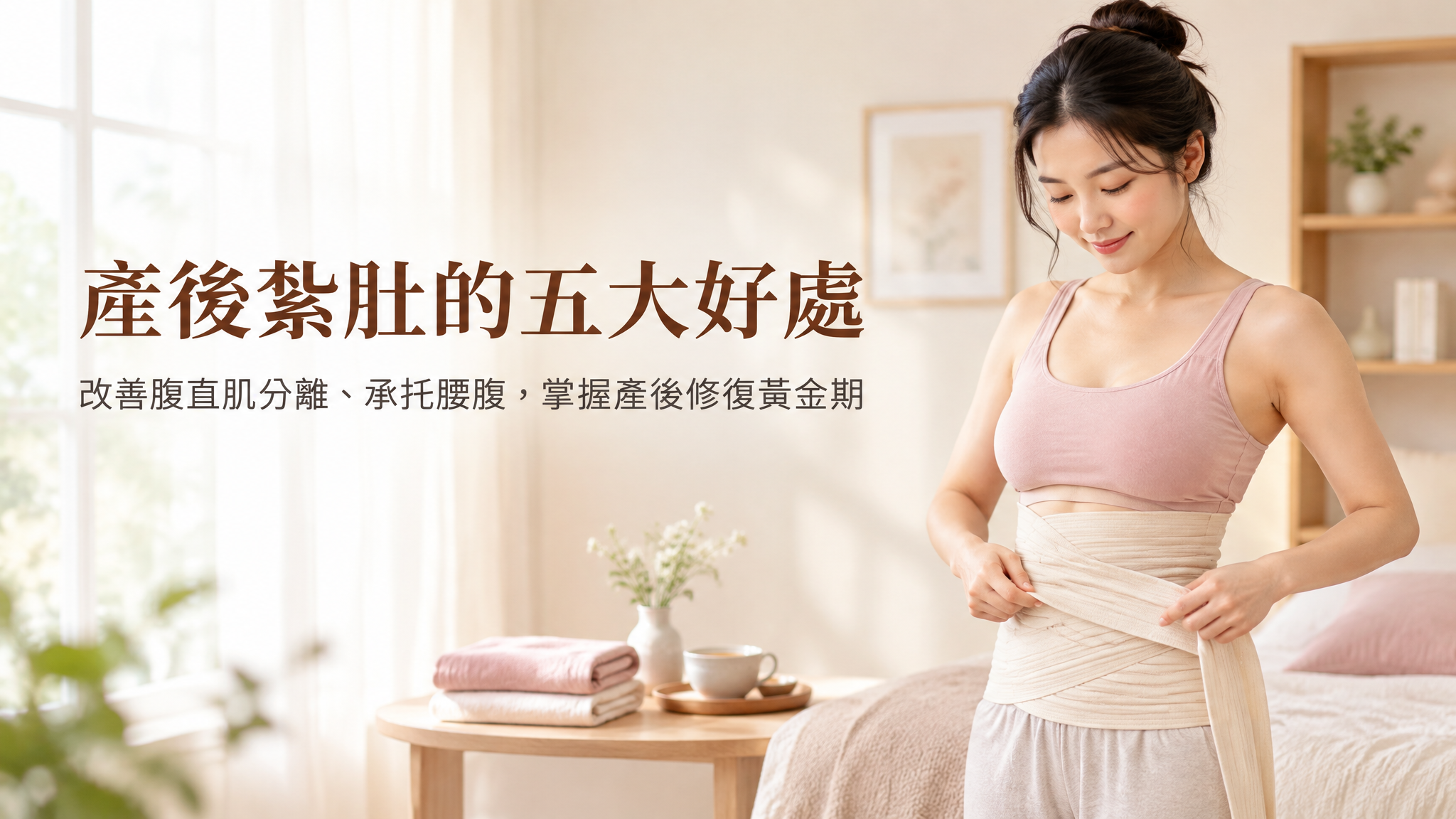
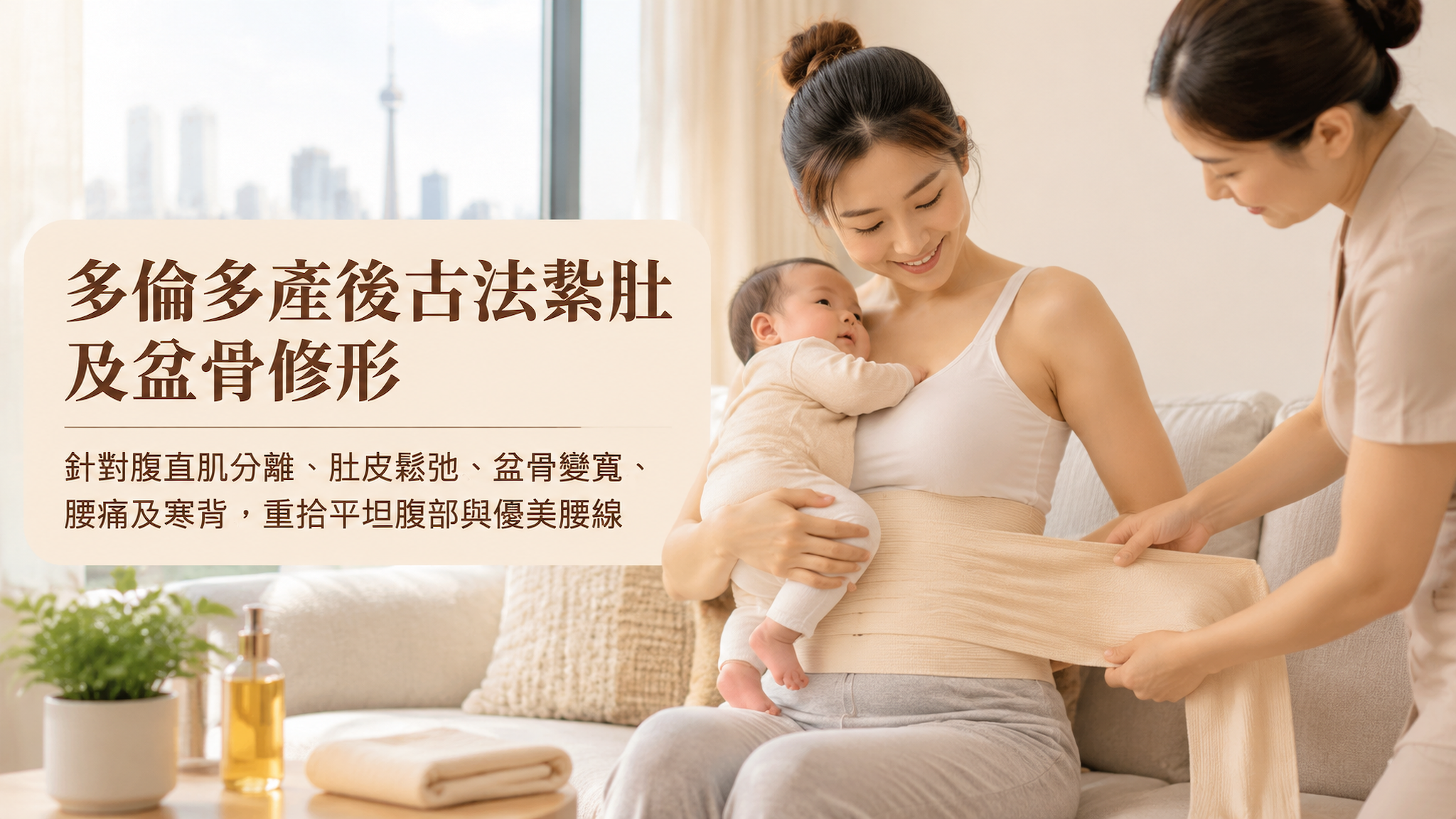
Postpartum “traditional belly binding” is tailored to each mother’s unique body shape, postpartum condition, and physical needs. It involves abdominal and back massage at appropriate points, followed by wrapping a long cloth band in successive circles from the pelvic area upward to the sternum.
When applying the abdominal wrap, the pressure is adjusted according to different areas to provide support for the abdomen and lower back.The wrapping techniques for vaginal delivery and cesarean section differ, so the actual wrapping method, pressure applied, and treatment schedule must be adjusted according to individual circumstances. Mothers who have had a cesarean section should pay special attention to the healing of their incision and avoid applying direct pressure to areas that have not yet healed.
Traditional postpartum abdominal binding and pelvic reshaping are designed to improve the following physical conditions:
| To improve physical condition | |
|---|---|
| 🫄 | Helps the uterus contract, prevents prolapse, and assists the uterus and other internal organs in gradually returning to their original positions |
| ❤️🩹 | Accelerates the uterine healing process and improves the clearance of blood clots |
| 🧘🏻♀️ | Improves diastasis recti and helps narrow the pelvis |
| 👗 | Flatten the abdomen, reshape the waistline, and improve postpartum abdominal sagging |
| 🌬️ | Relieves constipation, accumulated stool, and difficulty passing gas |
| 💆🏻♀️ | Relieves postpartum lower back pain and discomfort in the lower back and spine |
| 🧍🏻♀️ | Corrects rounded shoulders and helps the body regain a straighter posture |
Traditional abdominal binding combined with pelvic contouring specifically addresses common postpartum issues in the abdomen, pelvis, lower back, and overall posture, providing the body with support, stability, and relaxation.For mothers who wish to improve their abdominal contours, regain their waistline, and gradually restore their figure after childbirth, they can arrange a suitable treatment plan based on their individual physical condition.
Postpartum recovery takes time, and every mom recovers at her own pace. During the abdominal binding, if you experience difficulty breathing, abdominal pain, wound discomfort, or pelvic heaviness, loosen the binding cloth immediately. Choose experienced professional caregivers who use the appropriate binding method for vaginal delivery or C-section, which can make your postpartum care much more reassuring. ✨
#TraditionalTorontoBellyBinding #PostpartumBellyBinding #PostpartumBodyShaping #DiastasisRecti #PelvicShaping #PostpartumCare #PostpartumBodyContouring #RelieffromLowerBackPain #PostpartumPosture #PostpartumRecoveryforMoms