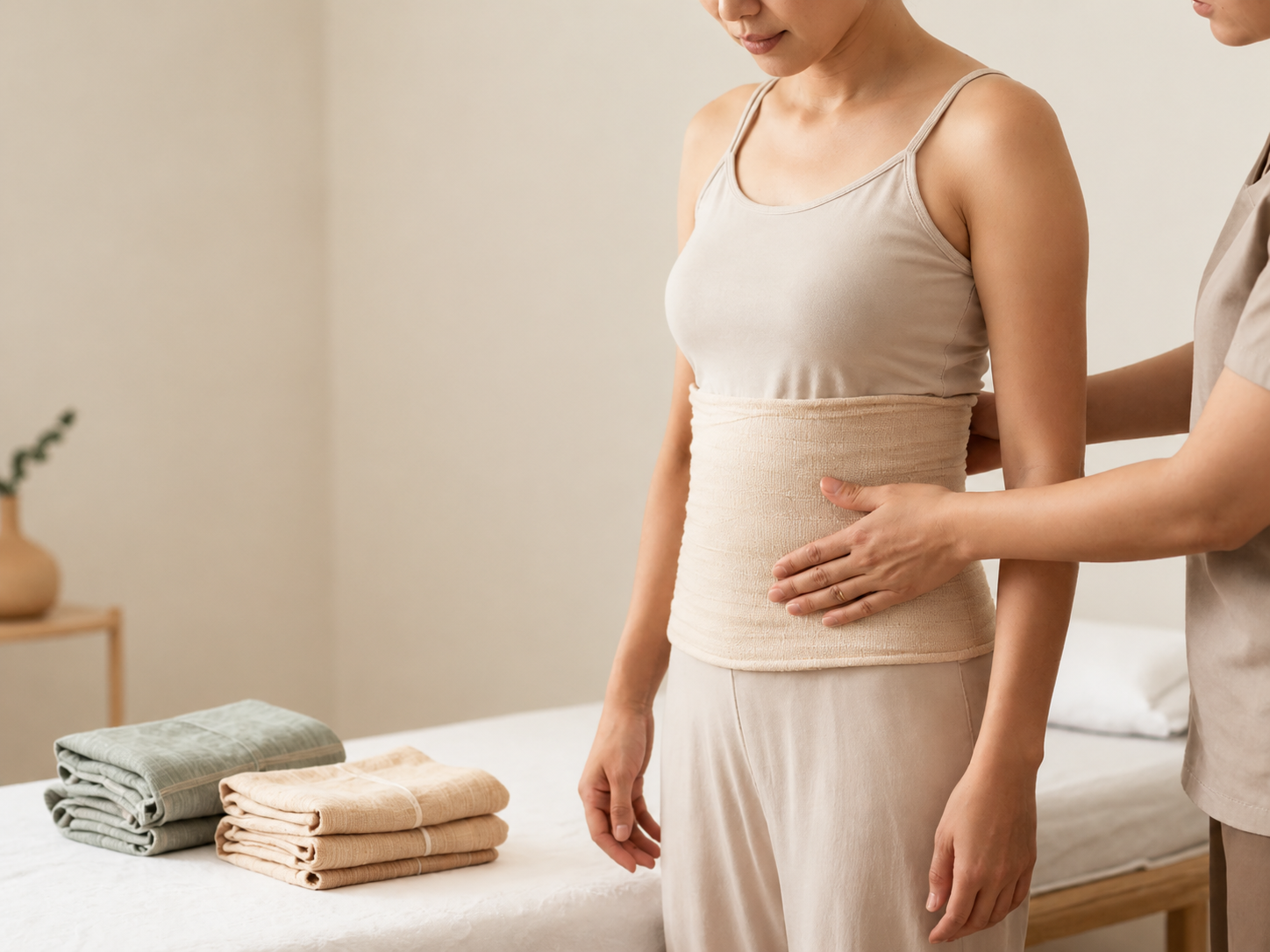
At Moonybebe, mothers often ask us, “What is the difference between Indonesian belly binding and Malaysian belly binding?” and “Which one provides faster results—Jamu or Bengkung?” In reality, both traditional belly-binding methods have their own cultural backgrounds, wrapping techniques, and wearing experiences. Neither method is suitable for every mother.
When choosing a postpartum belly-binding method, we believe mothers should consider their delivery method, recovery progress, body shape, skin sensitivity, daily activities, and comfort—not simply which method “tightens the abdomen fastest.”
What Is Indonesian Jamu Belly Binding?
Indonesian belly binding is often associated with the traditional postpartum care culture of Jamu. Jamu generally refers to Indonesian traditional herbal wellness practices. In postpartum care, some services use long pieces of fabric wrapped around the abdomen, waist, and pelvic area.
Indonesian Jamu belly binding usually focuses on covering and supporting the abdomen and waist. The fabric may be relatively soft and applied through multiple layers and overlapping sections. After wrapping, some mothers feel that their waist and abdomen are supported and held in place, creating a sense of stability and comfort.
However, the actual fabric, number of layers, and wrapping technique may vary between practitioners and traditions. Therefore, we do not judge a method based on its name alone. We first learn about the materials and wrapping technique being used.
What Is Malaysian Bengkung Belly Binding?
Malaysian belly binding is commonly associated with the traditional Bengkung wrapping method. Bengkung generally uses a long piece of fabric that is wrapped in sections from the abdomen toward the waist and pelvic area. The fabric is overlapped gradually to create coverage and support.
Bengkung often provides a more structured feeling around the abdomen, waist, and pelvis. Mothers who prefer a more secure wrap and clearer support during daily postpartum activities may find this method suitable.
However, if the wrap is too tight, positioned incorrectly, or not adjusted according to the mother’s condition, it may cause breathing discomfort, abdominal pressure, skin irritation, or restricted movement. For this reason, we place great importance on pressure distribution rather than simply pursuing the tightest possible wrap.
How Do the Wearing Experiences Differ?
Both Indonesian Jamu and Malaysian Bengkung can provide a feeling of support around the waist and abdomen. However, the actual wearing experience depends on the fabric, wrapping direction, number of layers, body shape, and the mother’s physical condition on the day.
Some mothers prioritise breathability because they are concerned about postpartum sweating, sensitive skin, or discomfort around a healing wound. Others prefer a more noticeable feeling of support around the abdomen and waist. Thicker fabric and more layers do not necessarily provide better results. They may also increase heat and pressure.
At Moonybebe, we pay attention to whether the mother can breathe naturally, sit, walk, and care for her baby comfortably while wearing the wrap. If wrapping causes numbness, tingling, dizziness, difficulty breathing, skin redness, or discomfort around a wound, it should be loosened immediately and reassessed.
How Should You Choose?
We recommend considering the following factors:
- Your delivery method and postpartum recovery timeline
- Whether a C-section or perineal wound has healed properly
- Any pain in the abdomen, lower back, or pelvic area
- Whether your skin is sensitive, prone to sweating, or easily irritated
- Whether you need to hold your baby, breastfeed, or walk for long periods
- Whether you prefer a soft, comfortable wrap or a more structured feeling of support
- Whether you can breathe comfortably and move normally while wearing it
If you have recently had a C-section and the incision is still red, swollen, or painful, or if you have abnormal bleeding, fever, or signs of infection, we recommend consulting a doctor before considering abdominal wrapping.
You can also learn more about our Postpartum Belly Binding Services, Postpartum Care Services, and Mobile Postpartum Massage Services before choosing an option that suits your needs.
At Moonybebe, we do not promise that one wrapping method will tighten the abdomen faster, and we do not present belly binding as a way to burn fat or replace exercise. We focus on appropriate wrapping placement, pressure, breathability, and the mother’s actual comfort and experience.
If you are searching for “Indonesian belly binding,” “Malaysian belly binding,” “Jamu,” or “Bengkung,” please contact Moonybebe and tell us about your delivery method, how long it has been since childbirth, and your current physical condition. We will first understand your needs before helping you choose a suitable belly-binding approach.
This article is for general informational purposes only and is not a substitute for diagnosis or advice from a doctor or qualified healthcare professional. If you experience persistent pain, wound concerns, abnormal bleeding, difficulty breathing, numbness, or other discomfort, please seek medical attention promptly.
#IndonesianBellyBinding #MalaysianBellyBinding #Jamu #Bengkung #PostpartumBellyBinding #PostpartumCare #PostpartumRecovery #PostpartumMassage #TraditionalBellyBinding #TorontoPostpartumCare #PostpartumBellyBinding #JamuBinding #BengkungBinding #Moonybebe