'/%3E%3C/svg%3E)
'/%3E%3Cuse%20href='%23a'%20transform='rotate(216%20450%20300)'/%3E%3C/g%3E%3Cuse%20href='%23b'%20transform='rotate(72%20450%20300)'/%3E%3C/svg%3E)

'%3E%3Cpath%20stroke='%23000'%20stroke-width='4'%20d='m-35-37-13%2020m5%203%2013-20m5%203-13%2020m63%2042%206-9m1-2%206-9m5%203-6%209m-1%202-6%209m5%203%206-9m1-2%206-9m-96%200%2013%2020m5-3-6-9m-1-2-6-9m5-3%2013%2020m63-42-6-9m-1-2-6-9m5-3%2013%2020m5-3-6-9m-1-2-6-9'/%3E%3Ccircle%20r='24'%20fill='%23cd2e3a'/%3E%3Cpath%20fill='%230047a0'%20d='M0%200a12%2012%200%201%201%2020%2013%2024%2024%200%201%201-40-26A12%2012%200%201%200%200%200'/%3E%3C/g%3E%3C/svg%3E)


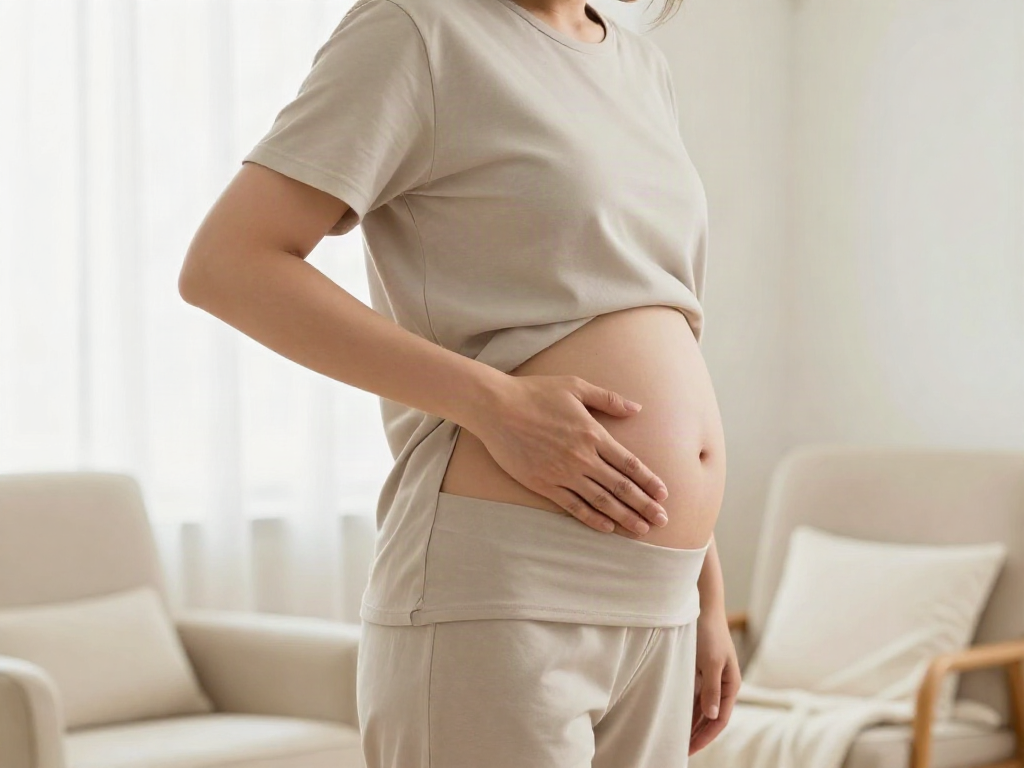
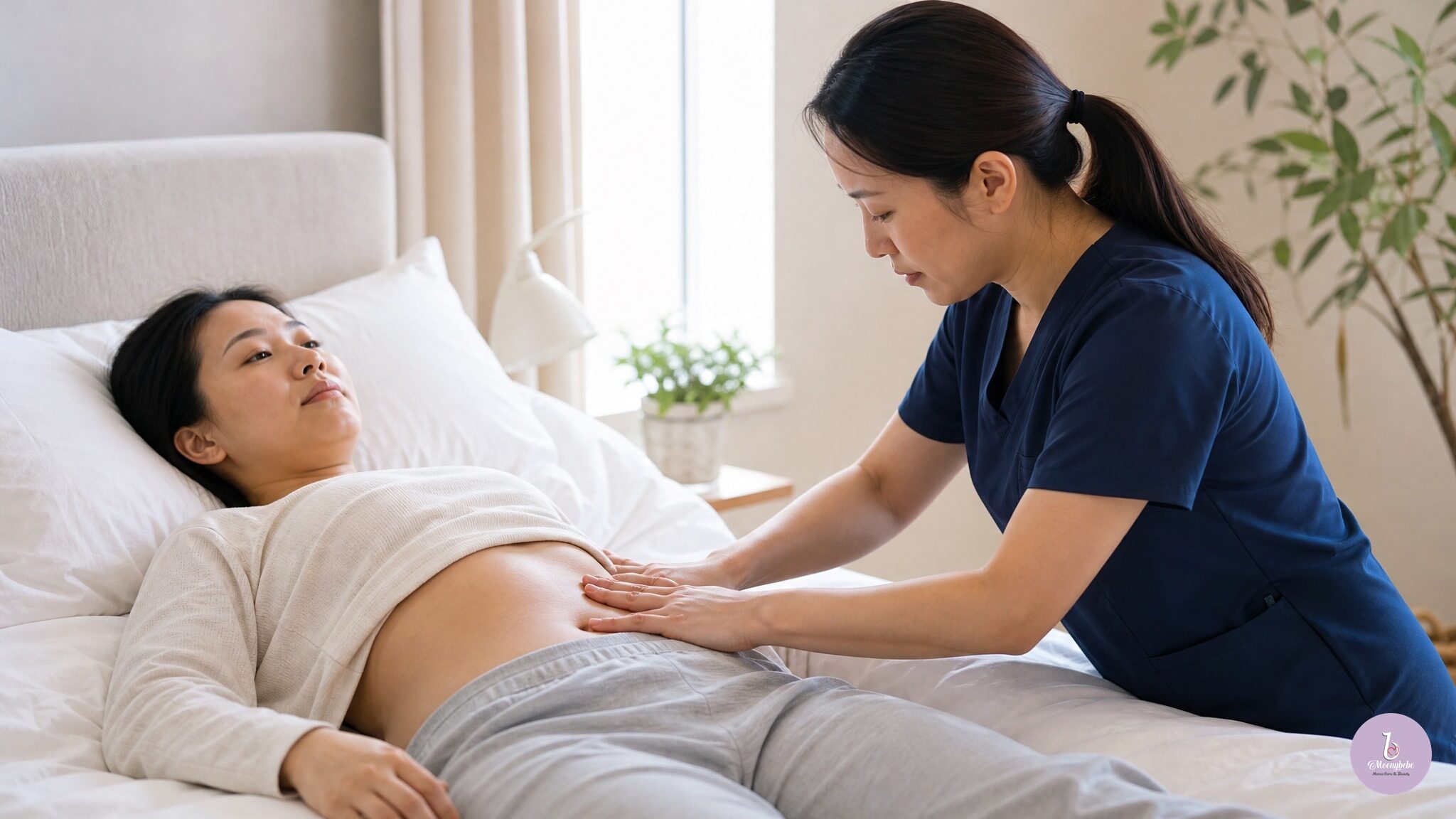
At Moonybebe, we often hear postpartum mothers ask, “Why is my belly still so big after giving birth? Is it simply because I’ve gained weight?” Some mothers feel anxious about their changing bodies and quickly turn to dieting, abdominal wrapping, or high-intensity exercise.
We understand that postpartum body changes can be difficult. However, a postpartum belly is not necessarily caused by fat alone. Abdominal protrusion may also be related to the uterus returning to its pre-pregnancy size, weakened core muscles, diastasis recti, changes in posture, pelvic positioning, and the body’s overall recovery. For this reason, we do not recommend judging whether you need to “lose weight” based only on your weight or waist measurement.
Why Does the Abdomen Still Look Prominent After Childbirth?
During pregnancy, the skin, muscles, and connective tissues of the abdomen gradually stretch as the uterus grows. After delivery, the body needs time for the uterus to contract, while the abdominal wall and core muscles slowly regain strength and control. Even after giving birth, the abdomen may remain loose or protrude forward for some time.
Some mothers may also experience diastasis recti, which occurs when the connective tissue along the centre of the abdomen becomes stretched, increasing the distance between the two sides of the rectus abdominis muscles. Diastasis recti may reduce abdominal support. When standing up, holding the baby, or exerting effort, some mothers may notice a bulge along the centre of the abdomen or around the navel.
However, checking the area yourself while lying down or measuring it with your fingers may not accurately determine the severity of diastasis recti. It also cannot provide a complete assessment of core function. Therefore, we do not recommend relying solely on online videos or simple self-checks to diagnose yourself.
Posture and Pelvic Position May Also Play a Role
Postpartum mothers often spend long periods holding the baby, breastfeeding, pumping, and bending over to provide care. If the abdominal and gluteal muscles do not yet provide sufficient support, the body may compensate by increasing the curve of the lower back or tilting the pelvis forward. These postural changes can make the abdomen appear more prominent and may also contribute to lower-back soreness and tightness around the pelvis.
At Moonybebe, we look at how a mother uses her body while standing, sitting, walking, and holding her baby, rather than focusing only on the appearance of the abdomen. We learn whether she has lower-back pain, pelvic discomfort, a noticeable abdominal bulge, limited mobility, or difficulty with daily movements. Based on her needs, we can then suggest an appropriate postpartum recovery approach.
For more information about the relationship between the pelvis, lower-back discomfort, and posture after childbirth, read our article: Are a Wider Pelvis, Lower-Back Soreness, and Poor Posture After Childbirth Connected?
When Should You Consider a Professional Assessment?
Every mother recovers at a different pace. The delivery method, wound healing, physical changes during pregnancy, and daily postpartum activities can all affect abdominal recovery. If abdominal protrusion continues without improvement, or if you notice a pronounced bulge along the midline when getting up, coughing, or holding your baby, you may wish to consider a professional assessment.
We also recommend consulting a doctor, pelvic health physiotherapist, or another qualified professional if you experience persistent lower-back pain, pelvic pain, abdominal weakness, urinary leakage, abdominal discomfort, or difficulty performing daily activities.
At Moonybebe, we first learn about the mother’s postpartum timeline, delivery method, wound recovery, pain location, and mobility before considering. You can also learn more about our approach through our Postpartum Care Services and Postpartum Massage Services.
Why You Should Avoid Crash Dieting or Exercising Too Intensely Too Soon
When the abdomen remains prominent, mothers may feel pressured to reduce their food intake, skip meals, or immediately begin running, sit-ups, planks, or high-intensity workouts. However, the body still needs nutrition, rest, and time to recover after childbirth. Excessive dieting may affect energy levels, mood, wound healing, and breastfeeding needs.
If the core muscles have not yet regained proper coordination, returning to high-intensity exercise too soon may increase pressure in the abdomen. This could make midline bulging, lower-back pain, pelvic floor discomfort, or urinary leakage more noticeable. We recommend beginning with breathing exercises, gentle movement, and everyday posture adjustments, gradually increasing activity according to advice from healthcare or qualified professionals.
Postpartum recovery is not a race, and faster is not always better. It is also not simply about reaching a certain number on the scale. The appearance of the abdomen is only one part of recovery; strength, mobility, comfort, and overall health are equally important.
If you are searching for “postpartum belly,” “diastasis recti,” “postpartum recovery,” or “postpartum weight loss,” please contact Moonybebe and tell us about your delivery method, how long it has been since childbirth, and any current discomfort. We will listen and learn about your situation before helping you identify a safe and appropriate care approach.
This article is for general informational purposes only and is not a substitute for diagnosis or advice from a doctor, pelvic health physiotherapist, or another qualified healthcare professional. If you experience severe abdominal pain, wound concerns, persistent urinary incontinence, a significant abdominal bulge, or a sudden decline in mobility, please seek medical attention promptly.
#PostpartumBelly #DiastasisRecti #PostpartumRecovery #PostpartumWeightLoss #PostpartumCore #PostpartumBackPain #PostpartumCare #PostpartumMassage #TorontoPostpartumCare #PostpartumBellyRecovery #Moonybebe