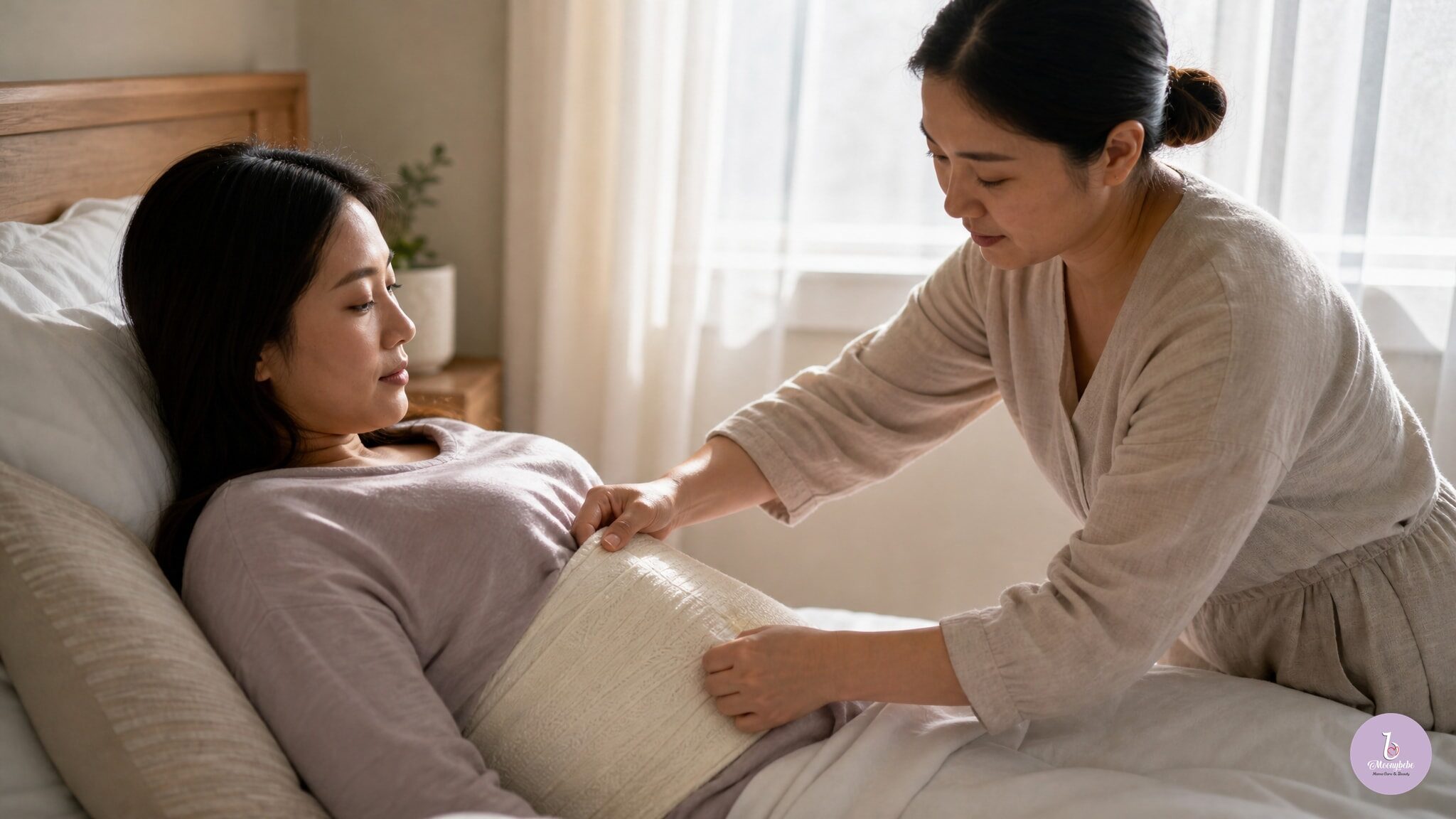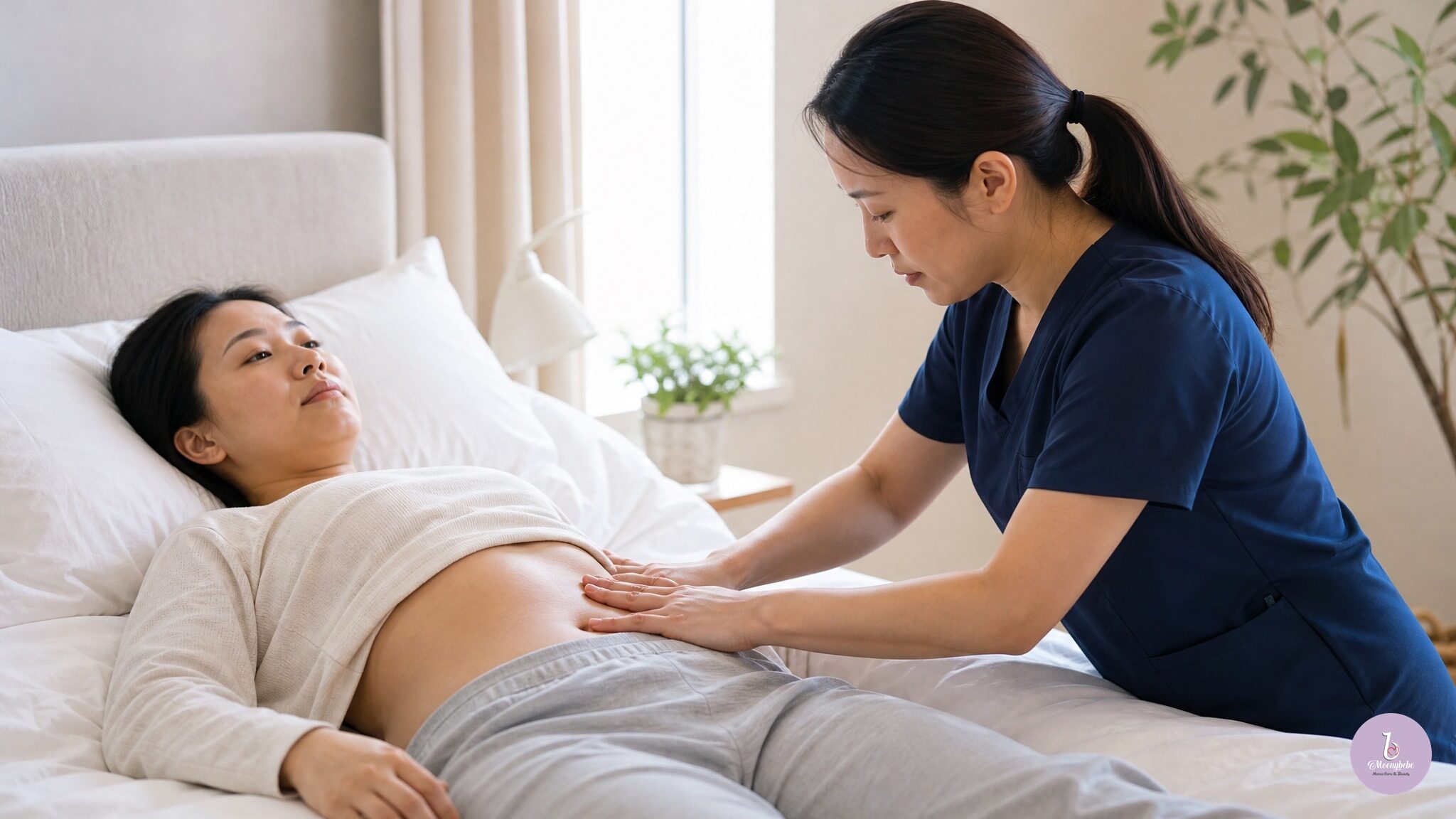
At Moonybebe, we often hear postpartum mothers say, “My pelvis feels wider after giving birth,” “My lower back becomes sore when I stand for too long—does that mean my pelvis is misaligned?” or “My abdomen sticks out—do I have an anterior pelvic tilt?”
We understand that pregnancy and childbirth can change a mother’s body shape, centre of gravity, and everyday movement patterns. However, the appearance of a wider pelvis, lower-back soreness, and poor posture after childbirth may not be caused by one single issue. We also cannot determine whether the pelvis has “shifted” based on appearance alone.
These three concerns may influence one another, but every mother’s situation is different. At Moonybebe, we first learn about the mother’s physical condition before considering an appropriate approach to postpartum pelvic recovery and care.
How Does Pregnancy Change the Body’s Centre of Gravity?
As the abdomen grows during pregnancy, the body’s centre of gravity gradually shifts forward. To maintain balance, many mothers unconsciously lean their upper body backwards, increase the curve of the lower back, or place more weight on one side. These compensatory postures may increase the workload on the muscles around the lower back, hips, and pelvis.
The physical changes that occur during pregnancy and childbirth may also affect the joints, ligaments, and muscles surrounding the pelvis. The body needs time to recover after delivery, and the abdominal and pelvic floor muscles may not immediately regain their pre-pregnancy support and coordination. As a result, some mothers may feel unsteady when standing, experience lower-back fatigue, or notice that their body shape looks different.
However, a pelvis that appears wider does not necessarily mean that the bones have permanently shifted. Changes in appearance may also be related to the condition of the abdominal muscles, pelvic position, standing posture, weight changes, and tension in the gluteal muscles. At Moonybebe, we do not recommend a type of pelvic care based solely on hip measurements or appearance.
Can Holding and Feeding Your Baby Cause Lower-Back Soreness?
After childbirth, mothers may spend many hours each day holding and feeding their baby, pumping, changing diapers, and bending over to organise baby supplies. These movements may seem simple, but remaining in the same position for long periods can place additional strain on the lower back and surrounding pelvic area.
For example, a mother may lower her head, round her shoulders, and bend forward to move closer to her baby during feeding. When carrying her baby, she may also favour one side and push one hip outwards to support the baby’s weight. Over time, this uneven weight distribution may cause tightness or soreness in the neck, shoulders, lower back, hips, or pelvic area.
At Moonybebe, we remind mothers to bring the baby closer to the body rather than repeatedly bending forward towards the baby. A supportive chair, footrest, or feeding pillow may help keep the shoulders relaxed during feeding. We also recommend changing carrying sides regularly instead of relying on the same side for prolonged periods.
Does an Anterior Pelvic Tilt Mean Something Is Wrong?
An anterior pelvic tilt occurs when the pelvis rotates forward. This may make the curve of the lower back appear more pronounced and cause the abdomen to look as though it is protruding.
However, pelvic position naturally changes with posture, movement, and muscle use. It cannot be accurately assessed from one photograph or a single observation.
Postpartum abdominal control, gluteal strength, hip mobility, and everyday standing posture may all influence pelvic position. Simply wearing a support belt, forcefully pulling in the abdomen, or following popular corrective exercises found online may not address the underlying cause. In some cases, these approaches may even make the discomfort worse.
At Moonybebe, we believe the goal of postpartum posture care is not to force mothers to constantly “stand tall and hold in the stomach.” Instead, we aim to help the body distribute physical load more naturally during breathing, standing, walking, and caring for the baby.
What Should Be Assessed Before Postpartum Pelvic Care?
Before providing postpartum pelvic recovery or related care, we first ask about the mother’s delivery method, how long it has been since childbirth, wound healing, pain location, and ability to perform daily activities. We also observe whether weight is distributed evenly between both sides of the body, whether movement around the pelvis and lower back is restricted, and which movements trigger discomfort.
If a mother has significant or worsening lower-back pain, pubic bone pain, hip pain, numbness or weakness in the legs, changes in bladder or bowel control, or reduced mobility, we recommend consulting a doctor or pelvic health physiotherapist.
At Moonybebe, we do not assume that every case of postpartum lower-back soreness is caused by a “misaligned pelvis.” We also do not promise that the pelvis can be “pushed back into place” during a single treatment. We first listen to how the mother feels and learn about the physical demands she experiences in daily life. We then provide suitable recommendations or referrals when necessary.
Postpartum recovery is not about immediately returning to your pre-pregnancy appearance. It is about gradually rebuilding comfortable movement patterns and physical support.
If you are searching for information about “postpartum pelvic recovery,” “postpartum lower-back soreness,” “anterior pelvic tilt,” or “postpartum posture,” please contact Moonybebe. We will first learn about your recovery before working with you to identify an appropriate care plan.
This article is for general informational purposes only and is not a substitute for diagnosis or advice from a doctor, physiotherapist, or other qualified healthcare professional. If you experience severe pain, numbness or weakness in the legs, loss of bladder or bowel control, fever, or other unusual symptoms, please seek medical attention promptly.
#PostpartumPelvicRecovery #PostpartumLowerBackPain #AnteriorPelvicTilt #PostpartumPosture #PostpartumBackPain #PelvicCare #PostpartumRecovery #PostpartumCare #TorontoPostpartumCare #PostpartumPelvicCare #Moonybebe