
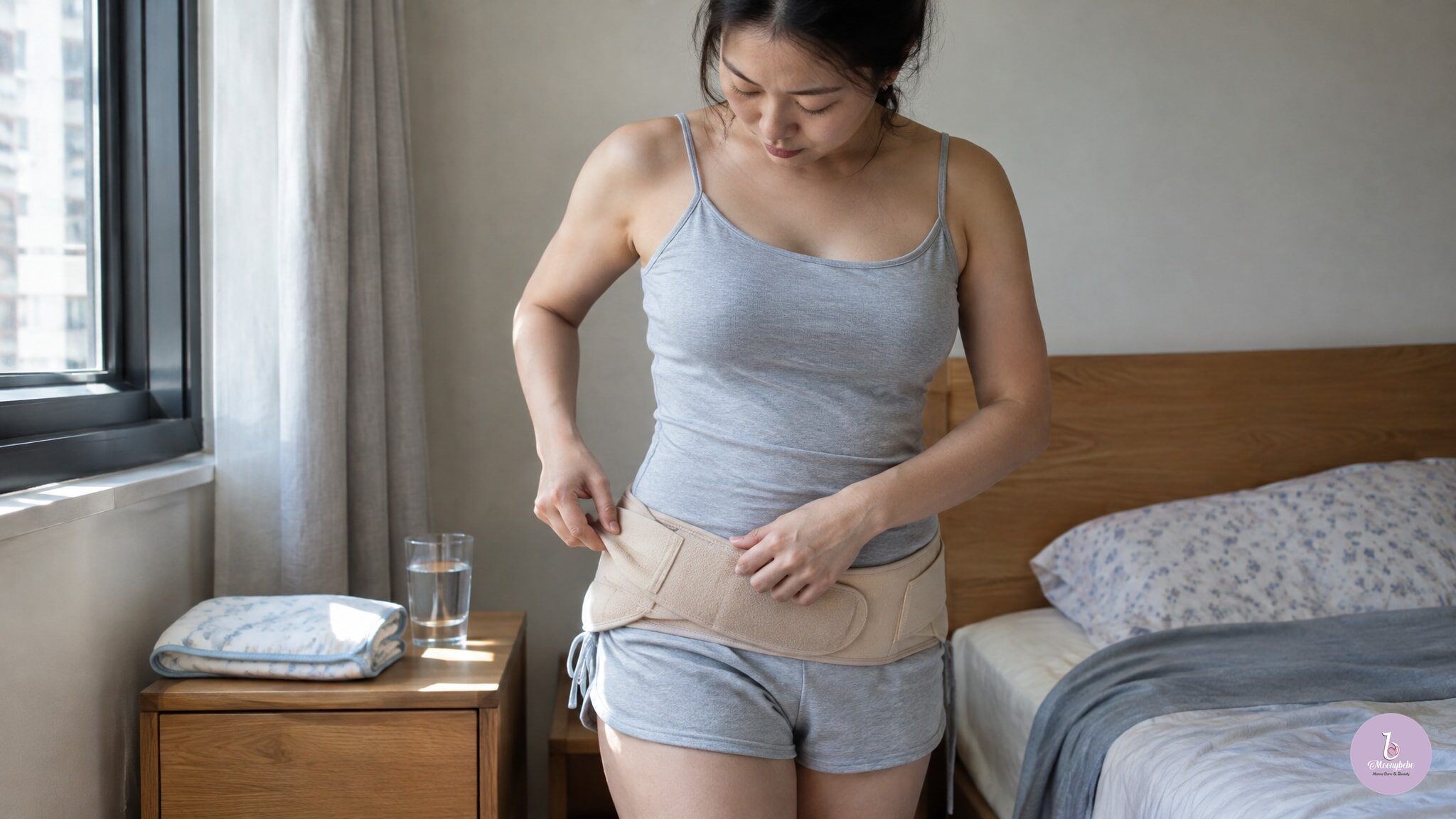
New mothers searching for information on postpartum recovery almost always encounter the same question: Do postpartum pelvic belts really work? Online forums are filled with all kinds of personal experiences—some say their pubic bone pain was immediately relieved after wearing one, while others complain that their hip width hasn’t changed at all after a month of use. These polarized reviews often leave new moms confused and may even lead them to anxiously purchase products out of fear of missing the “golden period” for recovery. Most discussions remain at the level of user experience, lacking professional analysis grounded in anatomy and biomechanics. A postpartum pelvic belt is neither a miracle cure nor a useless waste of money; its effectiveness depends on whether it is used for the correct indications and whether the user understands its true role in the overall postpartum recovery process. Are postpartum pelvic belts effective? Examining Real Effects and Limitations Through the Principles of Physical Support Imagine a mother who has just given birth—whether vaginally or via C-section—trying to get out of bed to breastfeed during her first postpartum week. She feels a distinct sensation of looseness deep within her pelvis, possibly accompanied by sharp pain at the pubic symphysis. She follows the instructions to fasten the pelvic belt and secure the Velcro straps; that unstable, wobbly sensation disappears instantly, replaced by a sense of security from being cradled, and the pain upon sitting up is significantly reduced. This is the core benefit of a pelvic support belt: it provides the external, passive support that is urgently needed during postpartum joint instability. According to an educational article on postpartum care by Inujirushi Honpo, during pregnancy, the pelvis widens due to the enlargement and anterior tilt of the uterus, as well as the effects of relaxin. Although the pressure subsides after childbirth, the pelvis may remain fixed in an anteriorly tilted position. At this point, the pelvic support belt provides the necessary external stability, allowing injured ligaments and joints the opportunity to rest and realign. However, this mother will soon discover a harsh reality: every time she unfastens the pelvic support belt to take a shower or change clothes, that feeling of looseness and pain returns. This does not mean the product is ineffective; rather, it reveals the inherent limitations of pelvic belts. Content reviewed by physical therapist Zhang Minxuan and Dr. Liu Yichen, a physical therapy specialist, indicates that while pelvic belts are indeed effective under specific circumstances, they are transitional aids and cannot replace active core and pelvic floor muscle training. It is like a cast after a fracture: it can prevent dislocation and relieve acute pain, but it cannot grow new muscles or rebuild neural control. If one mistakenly interprets “no pain when wearing it” as “already healed,” it will actually mask the warning signals the body is sending. Regarding frequency and timing of use, many mothers mistakenly believe that the longer they wear it, the better—some even wear it 24 hours a day for peace of mind. According to health education materials written by physical therapist Zhang Minxuan, research suggests that pelvic belts should be used for at least seven hours per week; the best results are achieved when use begins during pregnancy and continues through the postpartum period. The key here is “support,” not “dependence.” For new moms in the Toronto area who need more comprehensive guidance during Confinement care at home, you can refer to the Toronto Confinement Home Care Service Guide. With the help of professionals, you can establish correct usage habits and avoid blindly wearing the belt for long periods without proper guidance. What are the negative effects of long-term reliance on a pelvic support belt without exercise on pelvic recovery? This is a hidden risk that many mothers overlook. When external support replaces the work of internal muscle groups, the core muscles and pelvic floor muscles will undergo disuse atrophy due to prolonged inactivity. The deep muscles—which should be reactivated through breathing and movement—remain dormant due to external compensation. As a result, after removing the pelvic support belt, the body feels weaker than before wearing it, and the actual pelvic recovery process is indefinitely delayed. The effectiveness of a pelvic support belt has clear limitations. It is suitable for managing joint instability and pain in the early postpartum period, but it is not appropriate as a long-term tool for weight loss or posture correction. If you find that you cannot move normally without the pelvic support belt, or if your pain has not improved after wearing it for several weeks, this indicates that the passive support phase has ended, and you need to move on to the next stage of recovery. How to Use a Pelvic Belt and Its Side Effects: The Key to Avoiding Unhealthy Dependence The correct positioning is the primary factor in determining whether a pelvic belt will be effective without causing harm. Many mothers instinctively fasten the pelvic support belt at the narrowest part of their waist to achieve a visual slimming effect, but this not only fails to stabilize the pelvis but also increases abdominal pressure and pushes the internal organs downward. The standard position is at the greater trochanter of the hip—that is, wrap the belt around just below the most prominent bones on either side of your hips, which you can feel when you place your hands on your hips. Only at this position can the belt apply a direct inward stabilizing torque to the pelvic joints, truly alleviating the discomfort caused by symphysis pubis diastasis. Getting the tension just right is equally critical. A pelvic belt that is too tight will not accelerate healing; it will only pose risks. The appropriate tension is when you can barely fit one finger between the belt and your body after fastening it—it should provide sufficient support without impeding blood circulation or compressing nerves. If you experience skin irritation, a rash, difficulty breathing, numbness in the lower limbs, or increased pain while using the belt, stop using it immediately and consult a professional. These side effects typically indicate incorrect positioning or excessive tightness, rather than a normal reaction as your body adjusts. While using a pelvic support belt may seem simple, it actually requires a basic understanding of your own skeletal structure. This is why we recommend that mothers seek a professional evaluation before starting to use one, rather than trying to figure it out on their own based solely on online images and descriptions. When to Seek Professional Pelvic Rehabilitation Distinguishing between “home-based support” and “professional treatment” is the most critical decision point on the path to postpartum recovery. A pelvic support belt can address temporary mechanical instability, but it cannot resolve deeper issues such as muscular imbalances, fascial adhesions, or abnormalities in neural control. If you find that a pelvic support belt only relieves symptoms while you’re wearing it—and the pain returns immediately upon removal—or if you experience symptoms such as urinary incontinence, lumbosacral pain, leg length discrepancy, or pain during intercourse, this indicates that your body needs more than just external support—it requires targeted functional rehabilitation. You should seek the intervention of a registered therapist for a systematic assessment and treatment. Moonybebe’s Pelvic and Skeletal Recovery Program is specifically designed to bridge this gap between passive support and active stability. According to Moonybebe’s service description, this treatment is performed by internationally certified registered massage therapists who combine traditional techniques with modern anatomical assessment to provide personalized treatment plans for postpartum pelvic instability. Therapists do not simply advise you to keep wearing the belt; instead, they use palpation and movement tests to identify the true source of functional impairment, then guide the body toward regaining intrinsic stability through manual realignment and a personalized exercise regimen. This represents a fundamental difference from passive approaches that rely solely on devices; it is an active approach that addresses the root cause of the problem. Many mothers from Asian cultural backgrounds are familiar with the concept of traditional abdominal binding and may easily confuse modern pelvic belts with traditional binding methods. Understanding the comparison between traditional Bengkung and modern shapewear helps clarify the differences in materials, wrapping techniques, and physiological effects, preventing you from choosing a tool unsuitable for your current recovery stage due to cultural habits. Traditional Bengkung emphasizes gradual compression and full-body coverage, while modern pelvic belts focus on joint stabilization; each has its own appropriate applications. However, when dealing with functional impairments, neither can replace the manual therapy and exercise guidance provided by a professional therapist. For mothers living in the Greater Toronto Area, traveling to a clinic in the early postpartum period can be a burden in itself. Postpartum pelvic correction services in Toronto offer localized, professional options, allowing you to receive assessment and treatment in a familiar environment without having to travel between clinics while caring for a newborn. Professional intervention does not negate the value of pelvic belts; rather, it places them within the correct timeline for recovery, ensuring that every effort is directed toward true functional restoration—not merely a temporary masking of symptoms. When you’re ready to move from passive reliance to taking active control of your body, scheduling a free consultation is the best starting point to assess your individual recovery progress. #PostpartumPelvicBelt #PelvicRehabilitation #PostpartumCare #PostpartumConfinementInToronto #HowToUseAPelvicBelt #PostpartumRecovery #Moonybebe

Cart: 0 - $0
No products in the cart.


- Home
- About us
- Moonybebe Service
- Services Details
- Prenatal and Postnatal Care
- Postnatal Natural Belly Binding Treatment
- MaMa’s Sculpt and Glow Pro
- Pelvic Bone Treatment
- Health and Muscle Building Body Sculpting Treatment
- Pregnancy Massage(RMT optional)
- Painless Lactation / Lactation Massage Treatment(RMT optional)
- Postpartum Acupuncture Treatment
- Postpartum Acupoint Drainage Therapy
- Postpartum Stretch Marks & Scar Repair
- Postpartum Hand Therapy
- Infant and Toddler Massage
- Uterus-warming Massage Therapy
- Bust Lift Care Beauty Treatment
- Targeted Care Treatments by Chinese Medicine Practitioners
- Body Care and Fitness
- Postpartum Stretch Marks & Scar Repair
- Health and Muscle Building Body Sculpting Treatment
- Comprehensive Pain Relief Treatment
- Uterus-warming Massage Therapy
- Bust Lift Care Beauty Treatment
- Ice-free and Painless Hair Removal Treatment
- Lymphatic Drainage Massage
- Full-Body Massage for Moms & Dads
- Postpartum Acupuncture Treatment
- Targeted Care Treatments by Chinese Medicine Practitioners
- Beauty Care
- Postpartum Confinement Meal Plan Delivery Service
- Postpartum Care Store
- Testimonies
- Blog
- Client Manager
- Contact us
 English