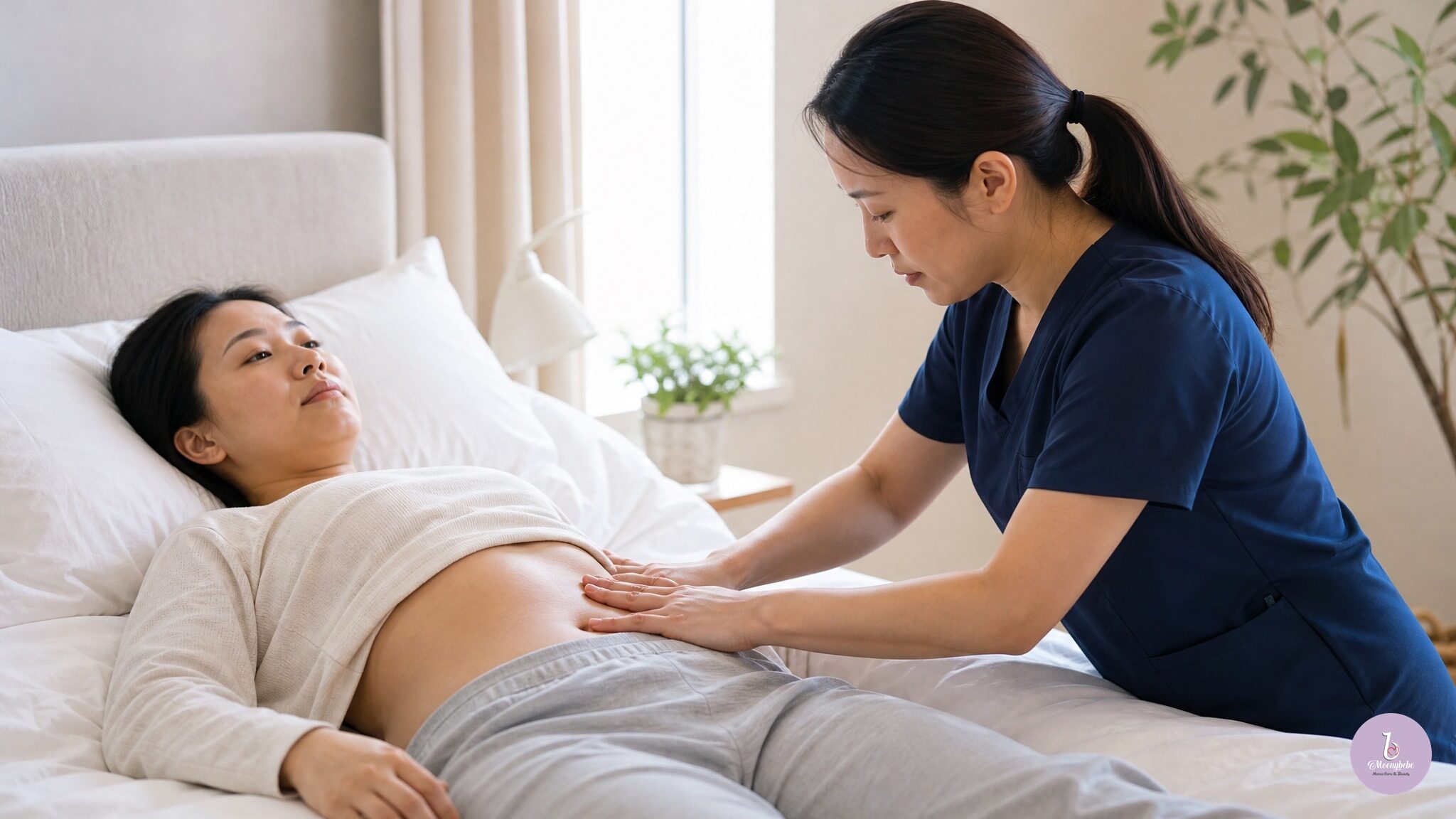
Toronto moms who have just finished their postpartum recovery period often feel conflicted when they look in the mirror: they long to regain their pre-pregnancy figure, yet worry that strenuous exercise might harm their bodies, which haven’t fully healed yet.This internal conflict is very common in the early postpartum period, especially when concerns about diastasis recti and organ prolapse remain unresolved; blindly pursuing weight loss may actually exacerbate the damage.
Moonybebe’s MaMa’s Sculpt and Glow Pro treatment combines the physical support of the Bengkung abdominal binding with deep tissue stimulation from modern equipment in a single in-home session. A licensed therapist will dynamically adjust the treatment parameters based on your postpartum week.This is not a typical weight-loss class at a gym, but rather a recovery program designed specifically for the postpartum body, allowing you to regain physical stability and confidence with peace of mind while caring for your newborn.
The Principle Behind the Synergistic Effect of Traditional Abdominal Binding and High-Tech Body-Shaping Devices
The core of postpartum body sculpting lies in prioritizing recovery over weight loss—this is what sets Toronto’s postpartum body sculpting programs apart from ordinary beauty or fitness services.Many new mothers believe that wearing a postpartum girdle is merely for aesthetic purposes, overlooking its fundamental role in postpartum physical recovery; meanwhile, relying solely on technological devices without adequate physical support often fails to achieve deep-level restorative results.
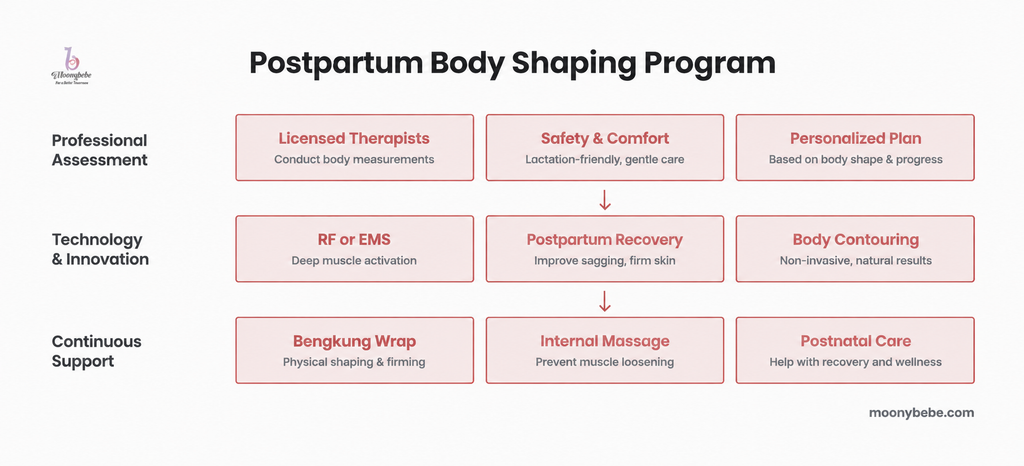
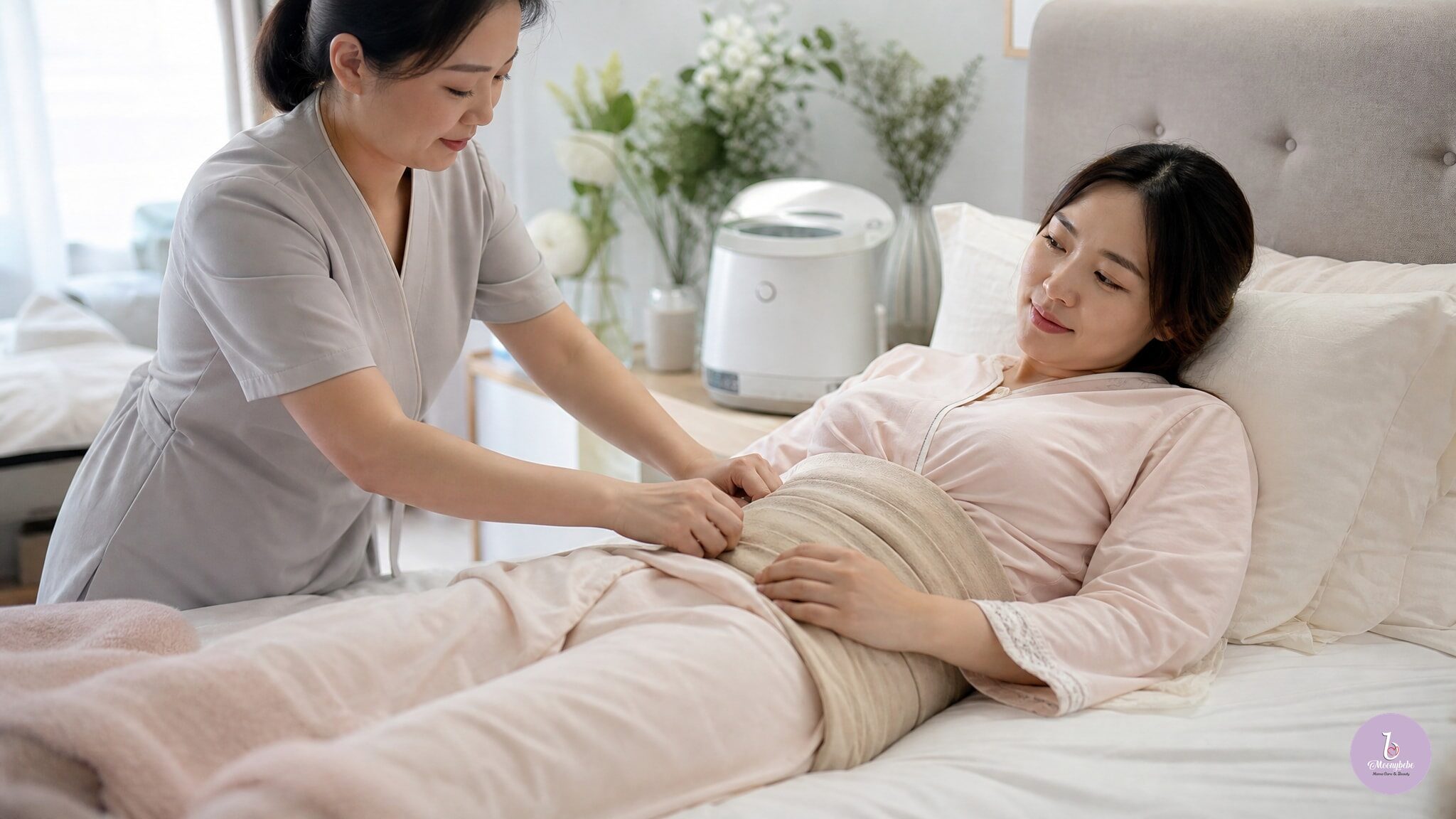
The traditional Bengkung abdominal binding technique is an essential foundation of the treatment regimen, providing continuous and gentle physical compression through the wrapping of long strips of cloth.This technique aids in uterine involution and the expulsion of lochia. More importantly, it provides external support for the relaxed abdominal wall muscles and displaced internal organs, preventing further sagging due to the effects of gravity. Only when your abdomen is securely supported can the deep core muscles reconnect in a safe environment.This is a passive protective mechanism that no high-tech device alone can replace. If you’d like to learn more about this technique, please refer to the comprehensive guide to traditional postpartum belly-binding home services, which details the multiple benefits of belly-binding for postpartum recovery.
Only after traditional abdominal binding has established a solid physical foundation can modern body-shaping devices deliver precise, deep-tissue restoration, targeting tissues that are difficult to reach with manual massage.These devices typically utilize radiofrequency or electromagnetic pulse technology to penetrate the epidermis and reach deep muscle and fascia layers, promoting collagen regeneration and activating dormant muscle fibers.For the rectus abdominis muscles that have been stretched during pregnancy, this non-invasive energy stimulation accelerates the process of closing the gap while improving skin laxity and cellulite caused by hormonal changes during pregnancy.Technological devices overcome the limitations of traditional manual techniques in terms of depth and longevity, ensuring that postpartum body contouring treatments go beyond superficial firming to achieve true, deep structural functional restoration.
These two approaches do not operate independently within the same treatment regimen; rather, they form a complementary and symbiotic dual-action collaboration.Postpartum body contouring should prioritize tissue repair and functional recovery rather than simply fat loss; this is why the involvement of registered massage therapists and acupuncturists ensures the safety of treatments during breastfeeding and the postpartum lochia period.They will conduct a detailed assessment before treatment and select the appropriate tools based on your specific condition. The therapist will first stabilize the core area with an abdominal binder and then adjust the energy intensity of the devices based on your body’s real-time response to avoid discomfort caused by overstimulation.This integrated approach combining Eastern and Western practices is particularly suited to the physical needs of Asian mothers, preserving the emphasis on warmth and support found in the Confinement tradition while incorporating modern medical understanding of anatomical structures.If pelvic stability is a key concern for you, postpartum pelvic correction and postural balance services can complement body-sculpting treatments, enhancing the restorative effects from a holistic perspective.
What specific restorative benefits do these combined treatments offer for diastasis recti and pelvic stability?It simultaneously addresses two common postpartum issues: “insufficient support” and “difficulty in muscle activation.” The abdominal binder provides immediate external support to reduce strain on the ligaments, while the device stimulates the active contraction of deep muscles; performing both simultaneously enhances the efficiency of the healing process.When combined with postpartum acupuncture to regulate qi and blood and relieve aches and pains, it can also regulate qi and blood circulation from within, further optimizing the microenvironment for tissue repair.
In-Home Services and Customized Treatment Processes
Mothers raising newborns in Toronto, Markham, and Richmond Hill often find it difficult to be away from home for long periods of time. That’s exactly why Moonybebe offers in-home services in Toronto, Markham, and Richmond Hill—so mothers can receive professional postpartum belly-binding and high-tech body-shaping treatments without having to leave their babies.Postpartum emotional well-being is closely linked to the effectiveness of treatment, and receiving care in the comfort of your own bedroom can significantly reduce the stress associated with traveling to a clinic.You won’t have to travel back and forth to a clinic with a stroller in the cold wind or sweltering heat, nor will you have to worry about your baby’s crying disturbing others. This sense of security in your own environment is, in itself, part of the healing process.
The entire in-home service process is designed to accommodate the daily rhythm of new mothers. During the initial consultation, the therapist will ask about your method of delivery, the status of your wound healing, your breastfeeding frequency, and your current sleep quality—this information serves as the foundation for developing a personalized treatment plan.Everyone’s postpartum recovery process is different; there is no one-size-fits-all standard. The therapist will bring sterilized portable equipment to your home and lay out professional pads in the spot where you feel most comfortable, ensuring both hygiene and privacy.If your baby needs to be fed or soothed during the session, the treatment will be paused naturally to accommodate this, so you won’t face the dilemma of choosing between continuing the treatment and tending to your child.
The essence of customization is further reflected in the dynamic adjustments made during the treatment. A licensed therapist will constantly monitor your facial expressions and physical reactions; if tenderness in a specific area or abnormal milk secretion is detected, the therapist will immediately reduce the device’s intensity or adjust the tightness of the abdominal wrap.This real-time feedback is something machines with fixed programs cannot achieve, and it is precisely where the value of in-home services provided by professionals lies.For example, mothers who have had a cesarean section may have sensitive nerve areas around their scars. The therapist will avoid that area or treat it using a lower energy level, stimulating the surrounding tissues without interfering with wound healing.Similarly, if the mother is experiencing heavier lochia flow, the treatment will be adjusted to a gentler lymphatic drainage mode rather than intense deep stimulation.
Choosing in-home care also means you’ll benefit from a consistent care relationship.Regular visits from the same therapist or a consistent care team help build trust: they remember the exact spot where you mentioned lower back pain last time and understand your baby’s daily routine. This sense of being remembered and understood provides immeasurable emotional support for new mothers, who often feel isolated and helpless after childbirth.Knowing that a professional comes to your home at a set time each week, dedicated to helping you recover, provides a sense of security that gradually eases your tension and enhances the overall quality of your recovery. This is not just a physical treatment; it is a period of gentle support and companionship during this transitional phase.
The Safe Time for Postpartum Body Contouring and Expected Results
The timing for starting a postpartum body-shaping program must be carefully assessed, as the safe timeframes differ between mothers who had a vaginal delivery and those who had a cesarean section. Generally, mothers who had a vaginal delivery can begin mild abdominal binding and low-intensity device treatments approximately four to six weeks postpartum, once lochia has turned pale and there are no signs of infection at the incision site;Mothers who have had a cesarean section, however, should wait at least eight to twelve weeks and receive confirmation from their obstetrician-gynecologist that the internal incision has healed properly before proceeding. These timeframes are for reference only; a face-to-face assessment by a registered therapist is essential before beginning any treatment, as tissue repair rates vary significantly from person to person, and starting too early may actually delay the healing process.
When performed correctly and at the appropriate time, treatments that combine traditional methods with technology are highly safe for breastfeeding, uterine recovery, and pelvic stability.Therapists are professionally trained to avoid areas of dense mammary tissue and sensitive acupoints, ensuring that the device’s energy does not affect milk production or quality. On the contrary, appropriate relaxation of the back, shoulders, and neck can relieve muscle tension caused by breastfeeding postures, indirectly promoting smooth milk flow.As for uterine recovery, gentle abdominal compression and deep heat therapy help promote uterine contractions and the expulsion of lochia; as long as the acute inflammatory phase is avoided, there is no risk involved.Regarding the pelvis, the stable support provided by a girdle can reduce misalignment pressure on the sacroiliac joints, creating favorable conditions for subsequent pelvic realignment.
Please set realistic expectations for your recovery. This type of treatment isn’t magic—it won’t return you to your pre-pregnancy weight in just a few sessions.Its true value lies in the improvement of functional indicators: you’ll notice a significant reduction in lower back pain, feel more core strength when holding your baby, and experience the saggy, hollow feeling in your abdomen gradually replaced by a firm sense of support. If you can’t fasten your pants, it’s no longer because of fat, but because your pelvis hasn’t yet returned to its proper position.These subtle yet tangible changes are the true signs of successful postpartum body sculpting.
Weight loss is often a natural result of restored function, rather than the primary goal. As your deep muscles relearn how to work, your metabolic rate naturally increases, and excess water and fat are then metabolized in a healthy way.
If you encounter a plateau or have concerns during your recovery, seeking a professional evaluation is always the safest option.A therapist can assess your current physical condition to determine whether your treatment plan needs to be adjusted or recommend a referral to other medical resources. Postpartum recovery is a marathon, not a sprint; giving yourself enough time and patience is more important than rushing the process.
#TorontoPostpartumCare #PostpartumBodySculpting #Bengkung #PostpartumRecovery #Moonybebe #TorontoPostpartumCareCenter #PostpartumDiastasisRecti #Tech-PoweredBodySculpting #In-HomeServices #PostpartumPelvicCorrection