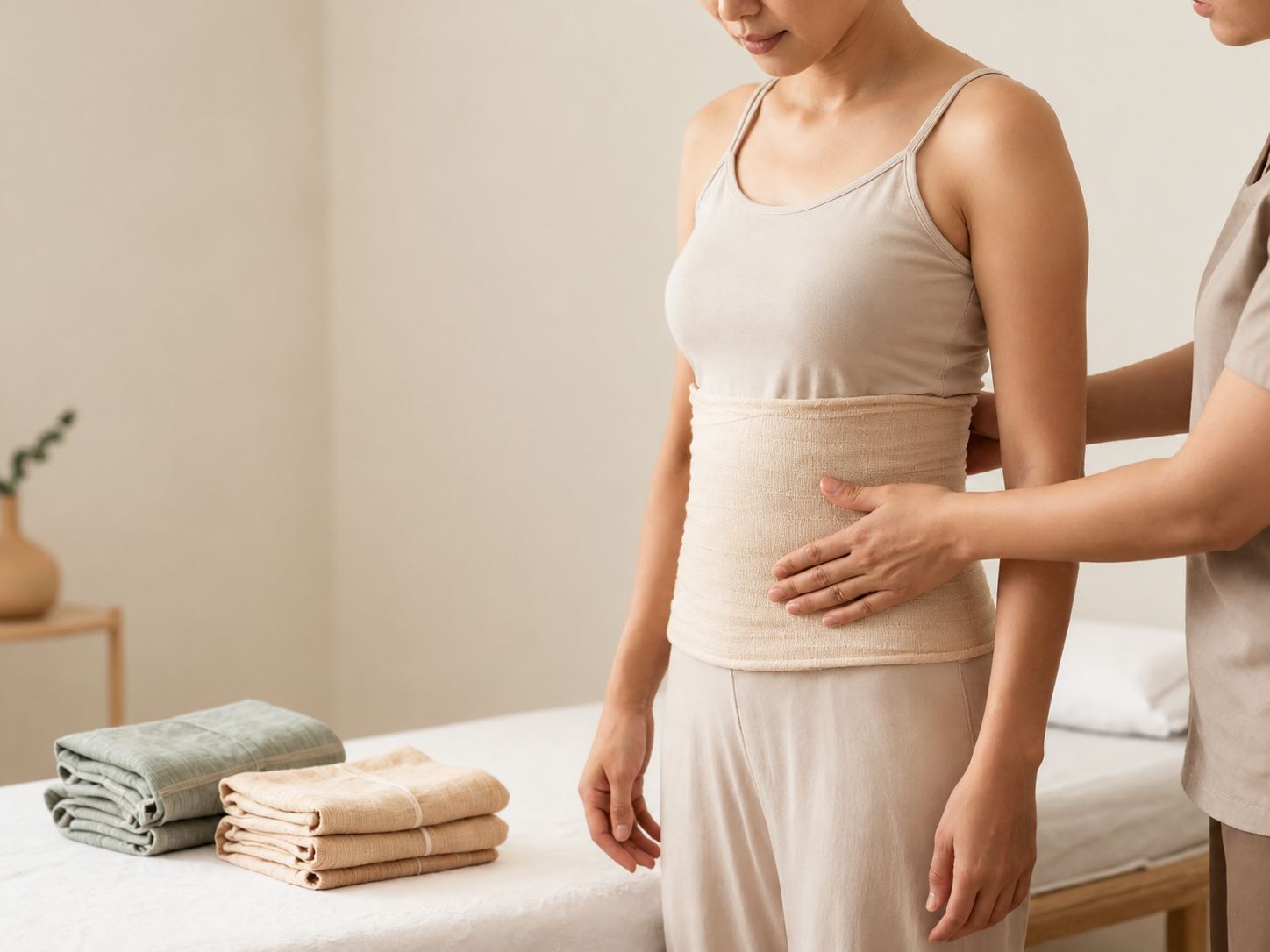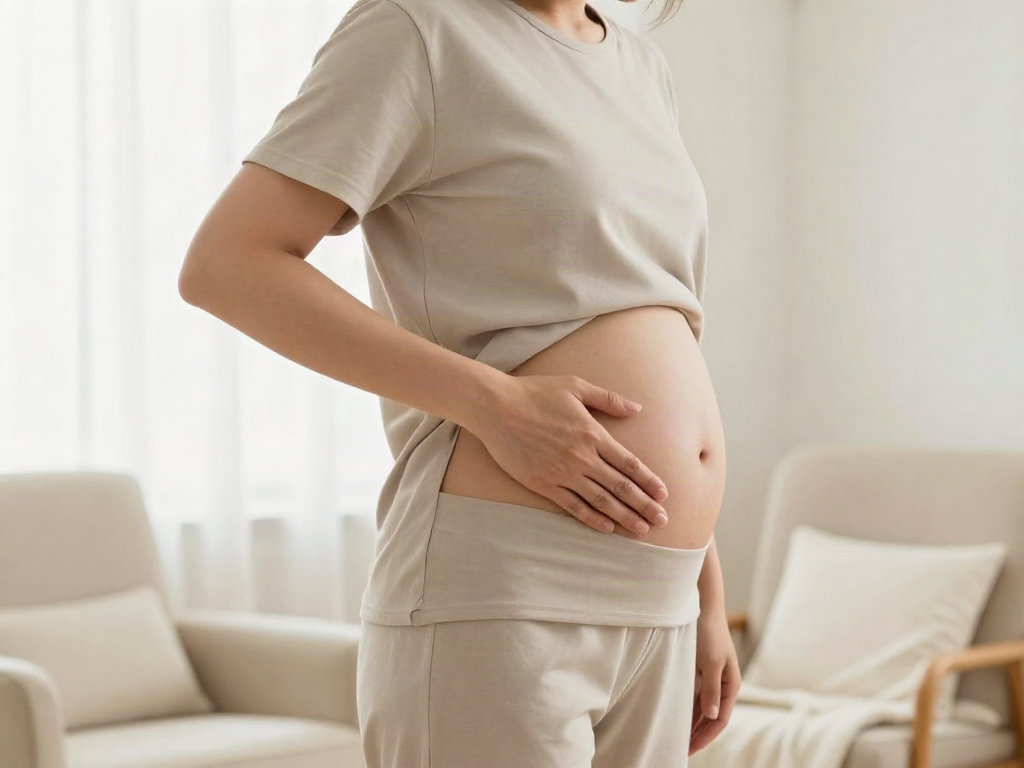
Many mothers ask us after giving birth: “Do I have diastasis recti?” It can be worrying to notice a ridge or bulge down the centre of the abdomen when sitting up, standing, or exerting yourself. However, a protruding abdomen is not necessarily caused by fat. It may also be related to diastasis recti, weakened core muscles, changes in pelvic alignment, or posture.
Diastasis recti occurs when the tissues in the abdomen are stretched during pregnancy as the uterus grows, causing the space between the left and right abdominal muscles to widen. Common postpartum signs include a bulge along the centre of the abdomen when sitting up, a lack of abdominal support, core weakness, and frequent lower-back discomfort. Some mothers may also experience urinary leakage, pelvic instability, or difficulty engaging their core during exercise.
Online diastasis recti self-tests usually involve lying on your back with your knees bent, gently lifting your head, and using your fingers to feel the gap around the navel. This may help you gain an initial understanding of your condition, but it cannot provide a formal diagnosis. The number of finger widths can be affected by abdominal fat, muscle tension, the testing location, the amount of pressure applied, and body position. Therefore, you should not determine whether your abdominal muscles have healed based only on the number of fingers you can fit into the gap.
Diastasis recti is also not solely about the width of the gap. Abdominal tension, core strength, breathing patterns, and movement coordination are equally important. Some mothers may have a relatively small gap but still experience significant abdominal bulging or functional limitations. Others may still have some separation but no discomfort during daily activities. For this reason, a self-test measurement may not accurately reflect the overall condition of your postpartum core.
If you only have mild abdominal laxity, no pain, and no impact on your daily activities, you may begin with breathing exercises, gentle core activation, walking, and posture correction while monitoring how your body responds. Postpartum recovery should be gradual. Starting sit-ups, intense abdominal exercises, or high-impact workouts too early may increase abdominal pressure and make the central bulge more noticeable.
We recommend consulting a doctor, physiotherapist, Registered Massage Therapist, or another qualified professional if you experience:
- Persistent abdominal or lower-back pain;
- A prominent abdominal bulge when sitting up, coughing, or exerting yourself;
- Urinary leakage, pelvic pressure, or pelvic pain;
- Core weakness that affects lifting your baby, walking, or daily activities;
- Symptoms that worsen after exercising;
- Ongoing discomfort around a C-section incision, scar, or other postpartum area.
In our Toronto Belly Binding and Diastasis Recti Recovery Case Study, we share the real experience of a mother whose abdomen remained difficult to tighten after childbirth. However, we always emphasise that every mother’s body is different, and belly binding or other postpartum care services cannot replace medical diagnosis. Understanding your body and choosing an appropriate approach is the first step towards diastasis recti recovery.
We want every mother to remember that diastasis recti does not mean you have failed, nor is it a problem that can be solved simply by losing weight. As we explain in our postpartum body recovery guide, postpartum recovery takes time, rest, balanced nutrition, and professional support. You can also explore our Diastasis Recti Articles for more information.
Self-testing can be a useful starting point for understanding your body, but it cannot replace professional assessment. If you have pain, urinary leakage, core weakness, or limitations in daily function, do not rely solely on online information. Seek advice from a qualified professional and begin your postpartum core and diastasis recti recovery safely.
#DiastasisRectiSelfTest #PostpartumCore #DiastasisRectiRecovery #PostpartumRecovery #PostpartumCare #NewMoms #PelvicFloorRecovery #TorontoPostpartumCare #Moonybebe