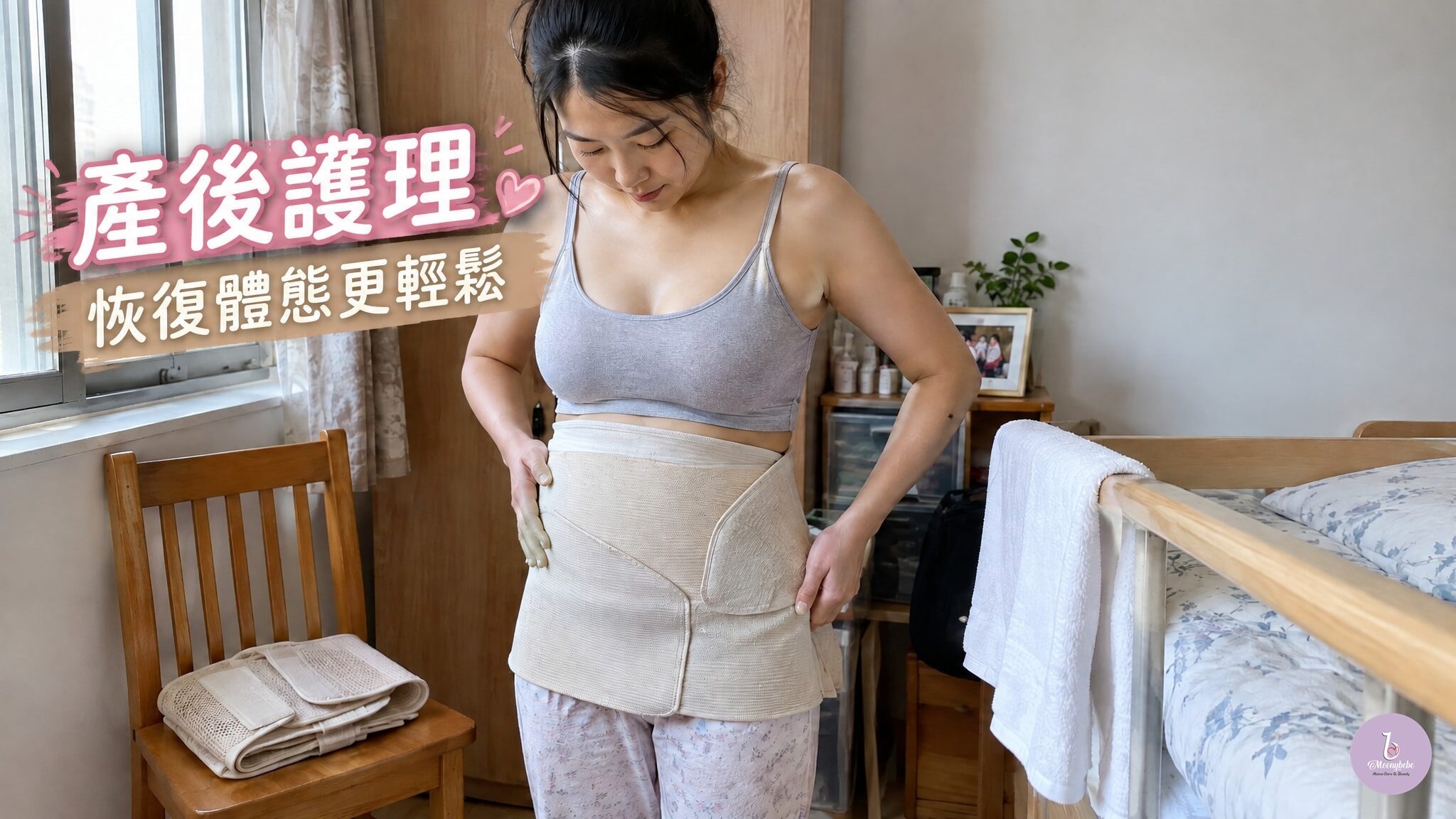
“When should I start wearing a postpartum belly band?” is one of the most frequently asked questions during the postpartum recovery period. Older family members might say to start right after giving birth, while online articles suggest waiting a while. New moms, caught in the middle, find it hard to know what to do.
From a therapist’s clinical perspective, the appropriate time to start wearing a postpartum belly band is not determined by the number of days on the calendar, but rather by the method of delivery, the condition of the incision and abdominal muscles, and whether healthcare professionals have confirmed that it is safe to begin.
When to Start Postpartum Belly Binding: Key Considerations Differ Between Vaginal and Cesarean Deliveries
Opinions vary: Some argue that a C-section allows for immediate postpartum use, while others maintain that one should wait for a while. Both views are overly simplistic; the key factors are whether the doctor approves and the condition of the incision.In traditional postpartum confinement customs, abdominal binding is often considered a routine practice, but the timing and tightness vary from family to family.
Let’s look at a typical scenario: A first-time mother who gave birth vaginally has just returned home. Although she is still experiencing heavy lochia, she wants to wear a postpartum girdle before going out for the first time, as she feels more at ease that way.
The therapist won’t give her an exact number of days, because every woman’s uterus heals at a different rate—even among those who’ve had vaginal deliveries, the pace of recovery can vary.There are three criteria for determining when to start binding: whether the uterus is gradually recovering, whether lochia has noticeably decreased, and whether the perineal incision (if any) and the lower abdomen feel stable. If lochia is still heavy, it means the body is still expelling and healing, so there is no need to rush into binding at this time.
In the early stages of recovery, comfortable support is far more important than a defined waistline.
The reason lies in intra-abdominal pressure. The proper fit for a girdle is one that allows you to breathe normally, bend over, and move freely without causing pain; during the early stages of recovery, a tighter fit does not necessarily mean it’s more effective.If the girdle is tied too tightly, intra-abdominal pressure will rise, and this pressure may be transmitted downward to the pelvic floor—which is still in the process of recovery—placing an additional burden on an area that already needs rest.To integrate the use of a postpartum girdle into your overall recovery rhythm, refer to the timeline for various aspects of postpartum physical recovery rather than basing your decision on a single point in time.
There is a set sequence for professional assessments. First, the doctor or midwife conducting the postpartum follow-up visit confirms the mother’s basic physical recovery. Second, a Registered Massage Therapist (RMT) assesses the support needs of the abdominal midline and pelvis and demonstrates the correct positioning and tension.For vaginal births, support typically begins with light support only after the body has stabilized to some extent and with the approval of a healthcare professional.
If the same mother switches to a cesarean section, the incision becomes the top priority. Pain, redness, swelling, and discharge must all be monitored first; the abdominal binder must also be positioned to avoid the incision, and use may not begin until the doctor gives explicit approval.Therefore, for vaginal births, the timing of starting abdominal binding depends on the condition of the uterus, lochia, and pelvic sensations, while for cesarean sections, it depends first on whether the incision has healed sufficiently and whether the doctor has given approval.
This isn’t about asking you to wait; it’s about letting your body get ready first. Once the initial postpartum period has passed, it’s not too late to start once you’re getting the right signals from your body and have received professional approval.
Before beginning, please consult a healthcare professional. If you simply want to confirm the placement and tightness of the abdominal binder,Moonybebe’s postpartum belly-binding treatments are provided by Registered Massage Therapists (RMTs) and internationally certified acupuncturists. Incorporating traditional Bengkung techniques, these treatments can be performed at home or in-store, and include a free consultation during which a registered therapist will assess your needs and demonstrate the technique.Our service area covers Toronto, Markham, Richmond Hill, and the Greater Toronto Area.
#PostpartumBellyBinding #WhentoStartBellyBinding #PostpartumCare #PostpartumRecoveryinToronto